| THE TEAM |
| THE CONCEPT |
| BEHIND THE SCENES |
| LOCATION |
Moving over the Shoreline is a moving image work inspired by historical and contemporary narratives associated with Yungaba house: Brisbane’s purpose-built ninteenth-century immigration depot. Written, conceived and directed by Sarah-Mace Dennis, the work was made with the assistance of a large cast and crew, including local people, first nations and multicultral dancers.
The work explores movement as a transformative passage that has historically facilitated journey and change. In doing so, the projections visually echo a sensorial trace of the experience of moving to a new landscape. By conceptually evoking ideas associated with movement, the project is an exploration of change and cultural transformation.
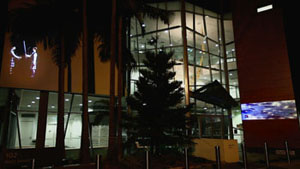
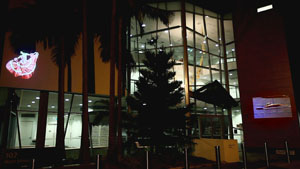
The permanent projection work involves four moving image sequences: two projected on to the surface of the Brisbane Multicultural centre building, and two displayed on monitors in the foyer of the space.
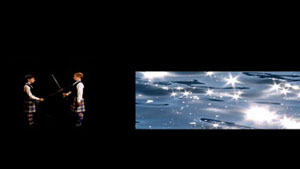
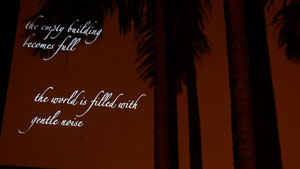
The projections that grace the façade of the building evoke the experiene of being emotionally and physically changed by the experience of exploring and navigating new geographic terrain. These projections intersect fragments of poetic text with abstract dance sequences and footage of objects and events that are representative of historical and contemporary accounts of immigration and colonisation. The work was developed in collaboration with multicultural performers and first nations dancers Nunukul Yuggera. The text was inspired by historical research and a series of interviews where participants shared their memories of Yungaba house, and contemporary migration stories.
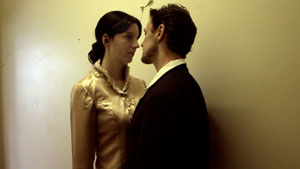
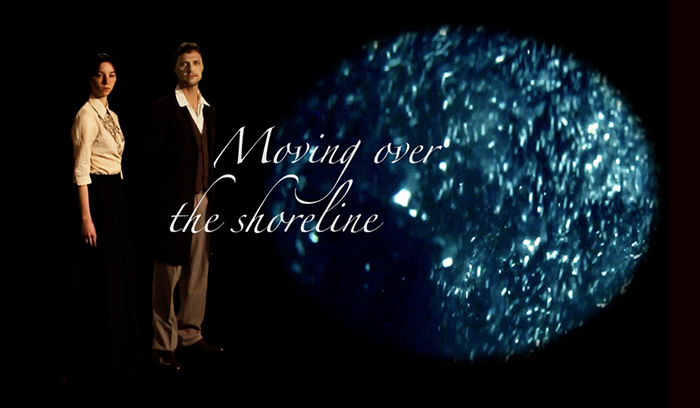
Starring Allison Manson and Joseph Taylor, and featuring composition by Lawrence English, the films that appear on monitors situated inside the building might be thought of the 'heart of the installation.’ Following the movements of two ghost-like characters, these sequences provide a visual trace of the internal of historic Yungaba house. Shot of stedicam, the aesthetic of these works references Alexander Sokurov's Russian Ark a film which explores Russia's history by following a ghost-like figure that wanders through the Russian State Hermitage Museum. But more than documenting Yungaba's internal architectural surfaces, these moving image sequences seek to evoke an internal state of consciousness: one that tries to imagine what it might have felt like to move to a new country in the early 20th century. Revisiting and remembering this building over a hundred years later, we see two ghost-like figures move over its halls and rooms, remembering the way this site once changed them.
The artist would like to thank the following participants for sharing their stories and memories of Yungaba house:
Niall Coburn
Roger Copping
The following participants are acknowledged for sharing their contemporary migration stories:
Silvia Apancio
Richard C Bell
The artist would also like to thank Angeline Smith, Joanne Pratt and BEMAC for the invaluable support, input and advice provided during the making of this work.